
Recent News
Book Talk with Author Dr. Mario Garcia, Oct 21
Oct 9, 2026
Rupert García: The Making of an American Artist, a Testimonio, with Author & Professor Dr. Mario Garcia
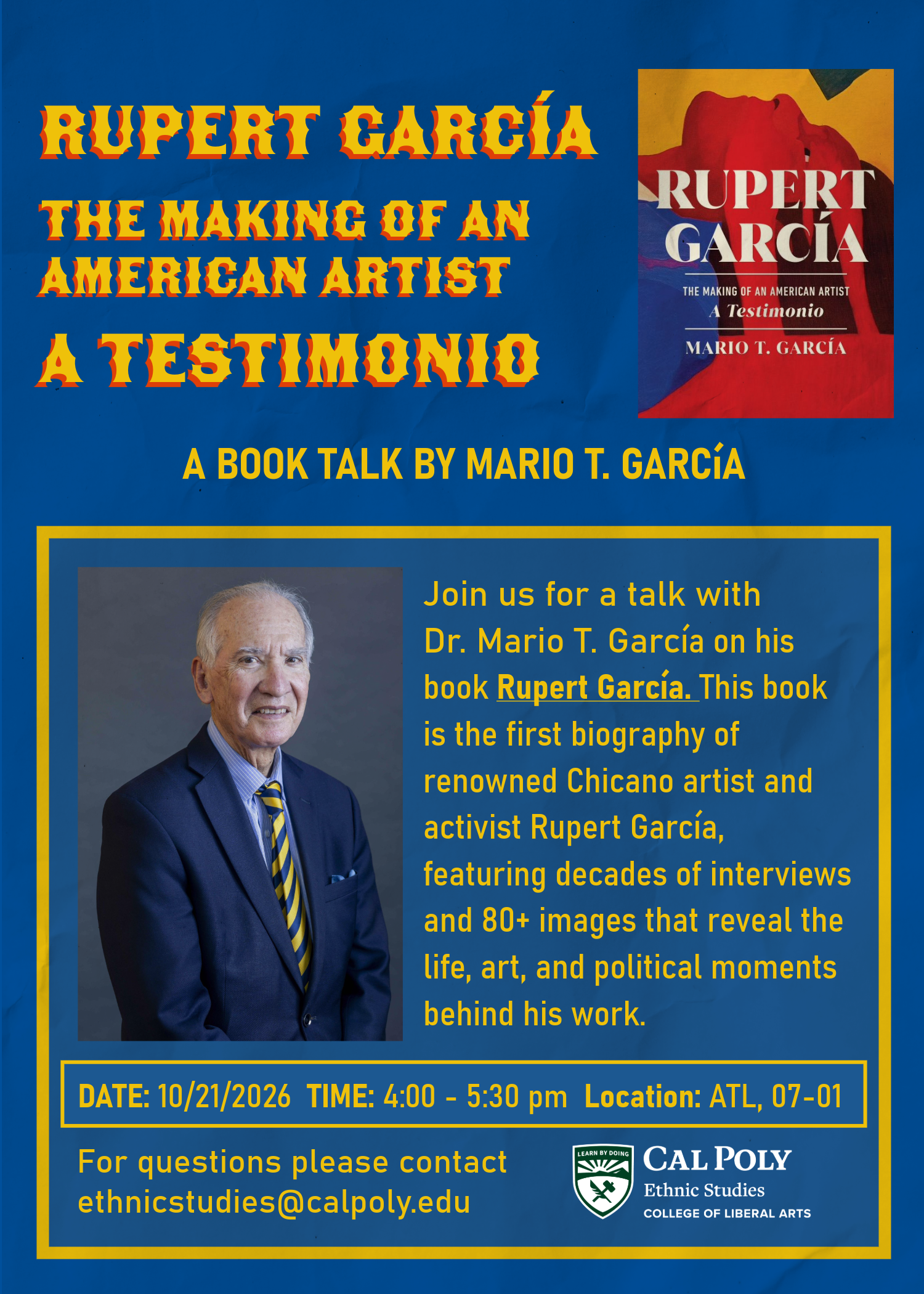
mario garcia book talk, 4-5:30 pm, oct 21, 2026 in the atl (07-01)
The Ethnic Studies Department will be hosting author and professor Dr. Mario Garcia from the University of California, Santa Barbara for a book talk about his book, Rupert García: The Making of an American Artist, a Testimonio. This event is available to the public and will take place on October 21st, from 4 pm to 5:30 pm in the ATL (Bldg. 07. Room 01). Please join us to hear more about his book, related topics, and participate in a Q&A!
About Dr. Mario Garcia
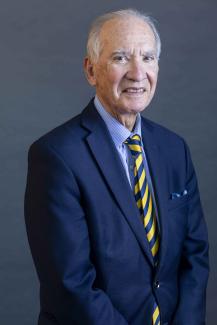
Twentieth century historian with expertise in mass immigration from Mexico; the development of immigrant communities such as El Paso; the “Mexican-American Generation” from the 1930s to the early 1960s; emergence of new leadership among the U.S. born generation; as well as the Chicano Movement Generation of the late 1960s and early 1970s. Research involves generational approaches, civil rights struggles, oral history, and even more recently Chicano Catholic history.
Cal Poly in Sicily: Language & Culture - Summer 2027
Oct 9, 2026
Cal Poly in Sicily: Language & Culture Program Information
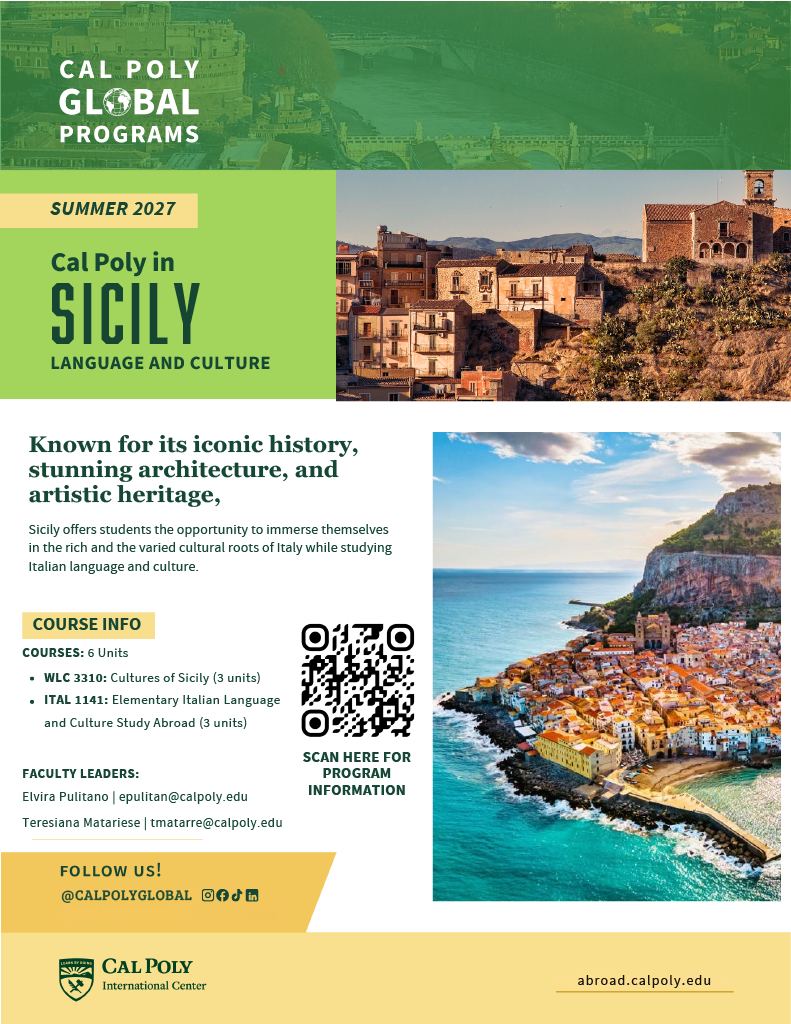
WLC 3310: cultures of sicily & ITAL 1141, offered in sicily, italy, summer 2027
The Cal Poly in Sicily: Language & Culture program is a 5-week,summer study abroad program that explores the intersection of language, culture, and contemporary social issues in one of the Mediterranean’s most dynamic cities.
Students earn 6 academic units through WLC 3310: Cultures of Sicily, taught in English by ES Faculty Leader Dr. Elvira Pulitano, and ITAL 1141: Italian Language, taught by Dr. Teresiana Matarrese, Coordinator of Cal Poly’s Italian Minor.
This program is open to students in all majors.
Financial Aid and Scholarships Information for Study Abroad Programs
Book Talk with Author Dr. Lisa Marie Cacho, Sept 17
Sep 14, 2026
Complex Innocence: Defending Defiant Victims of Police Killings, with Author & Professor Dr. Lisa Marie Cacho
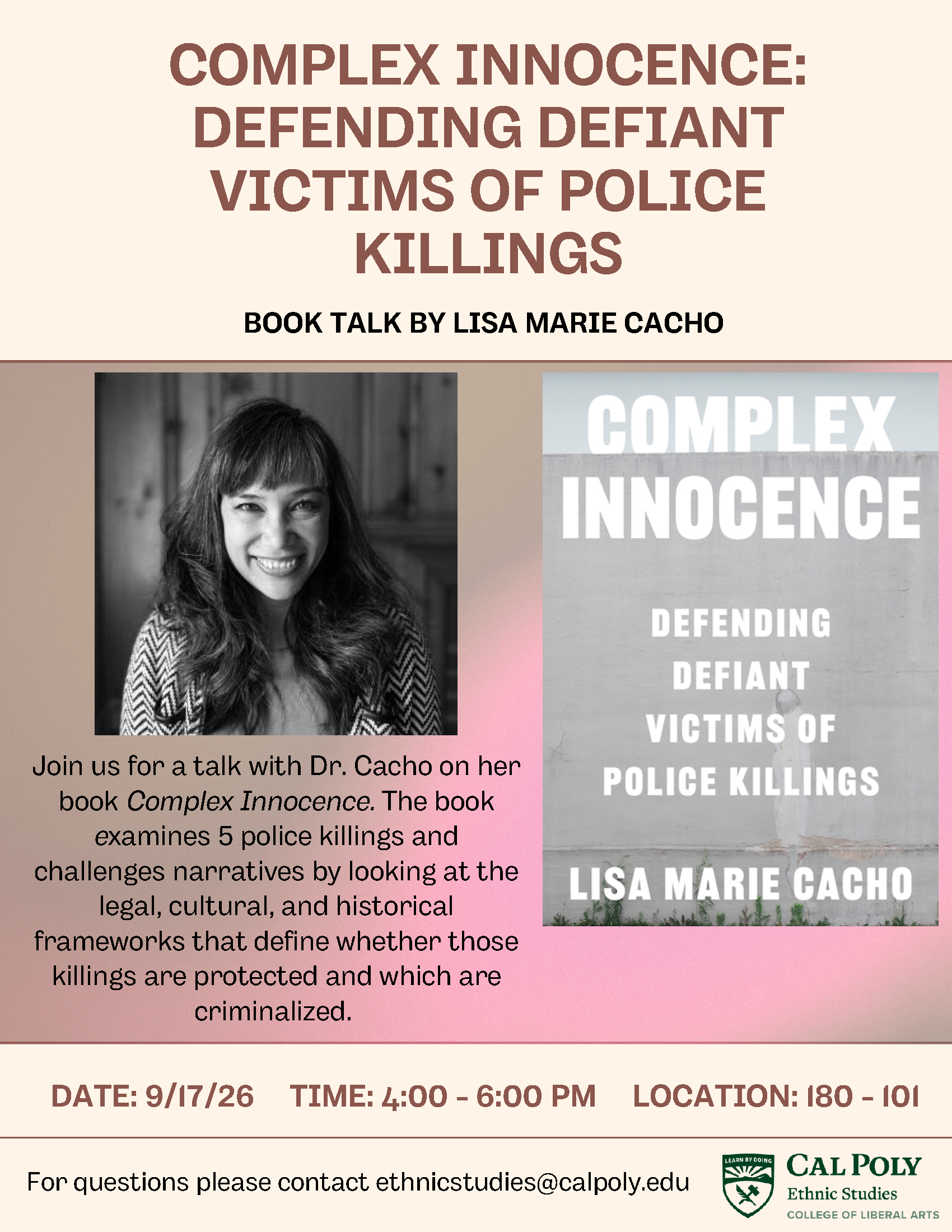
Lisa marie cacho book talk, 4-6pm, sept 17, 2026 in 180-101
The Ethnic Studies Department will be hosting author and professor Dr. Lisa Marie Cacho from the University of Virginia for a book talk about her new title, Complex Innocence: Defending Defiant Victims of Police Killings. This event is available to the public and will take place on September 17th, from 4 pm to 6 pm in the Baker Center, Room 101 (Bldg. 180. Room 101). Please join us to hear more about her book and this topic!
About Dr. Lisa Marie Cacho

In her scholarship, Lisa Marie Cacho interrogates the ways in which human value is both ascribed and denied relationally along racial, gendered, sexual, national and spatial lines. Her book, Social Death: Racialized Rightlessness and the Criminalization of the Unprotected (NYU Press, 2012) won the American Studies Association’s 2013 John Hope Franklin Publication Prize honoring the most outstanding book published the previous year in American Studies. She is an editor, along with Susan Koshy, Jodi Byrd, and Brian Jordan Jefferson, of Colonial Racial Capitalism (Duke 2022). Some of Cacho’s publications can be found in The Boston Review, GLQ, Social Text, and American Quarterly. Her new book, Complex Innocence: Defending Defiant Victims of Police Killings (NYU Press) will be published in Spring 2026.
Continue reading more from her bio here
Complex Innocence abstract and available to purchase here
Kazuma Daiko, New ES advised IRA for 2026-2027
Aug 24, 2026
The Kazuma Daiko IRA Begins This Academic Year
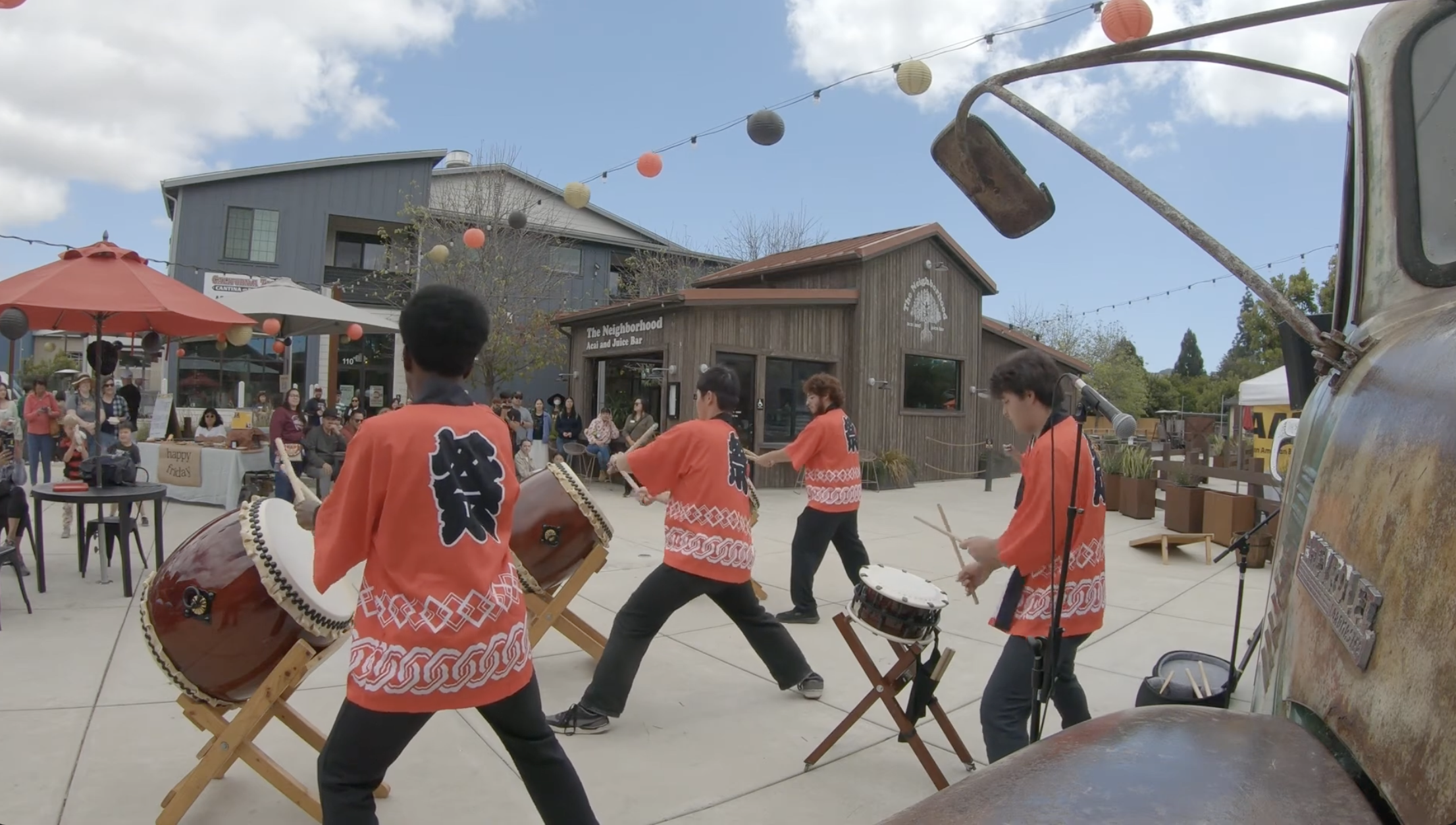
students performing at the aapi slo festival, may 11th 2026
The Ethnic Studies Department is now home to a brand new instructionally related activity (IRA)!
Beginning this academic year, the Kazuma Daiko IRA is advised by ES faculty member and Associate Chair, Dr. Grace Yeh, gyeh@calpoly.edu. Kazuma Daiko is a performing group where students learn Japanese Taiko, a traditional percussion/dance performing art. Kazuma Daiko has weekly practices as well as workshops for students to learn and improve their performance skills. Kazuma Daiko performs both on and off campus and for the annual Haramatsuri (Spring Festival). Find out more about the group using their profile links below!
Visit their YouTube channel here!
Read about our other ES advised IRAs
ES Major Edwin Majano Villalobos Selected for CSU California Pre-Doctoral Program
Jun 16, 2026
Ethnic Studies Major, Edwin Majano Villalobos, Selected for 2026 CSU California Pre-Doctoral Program
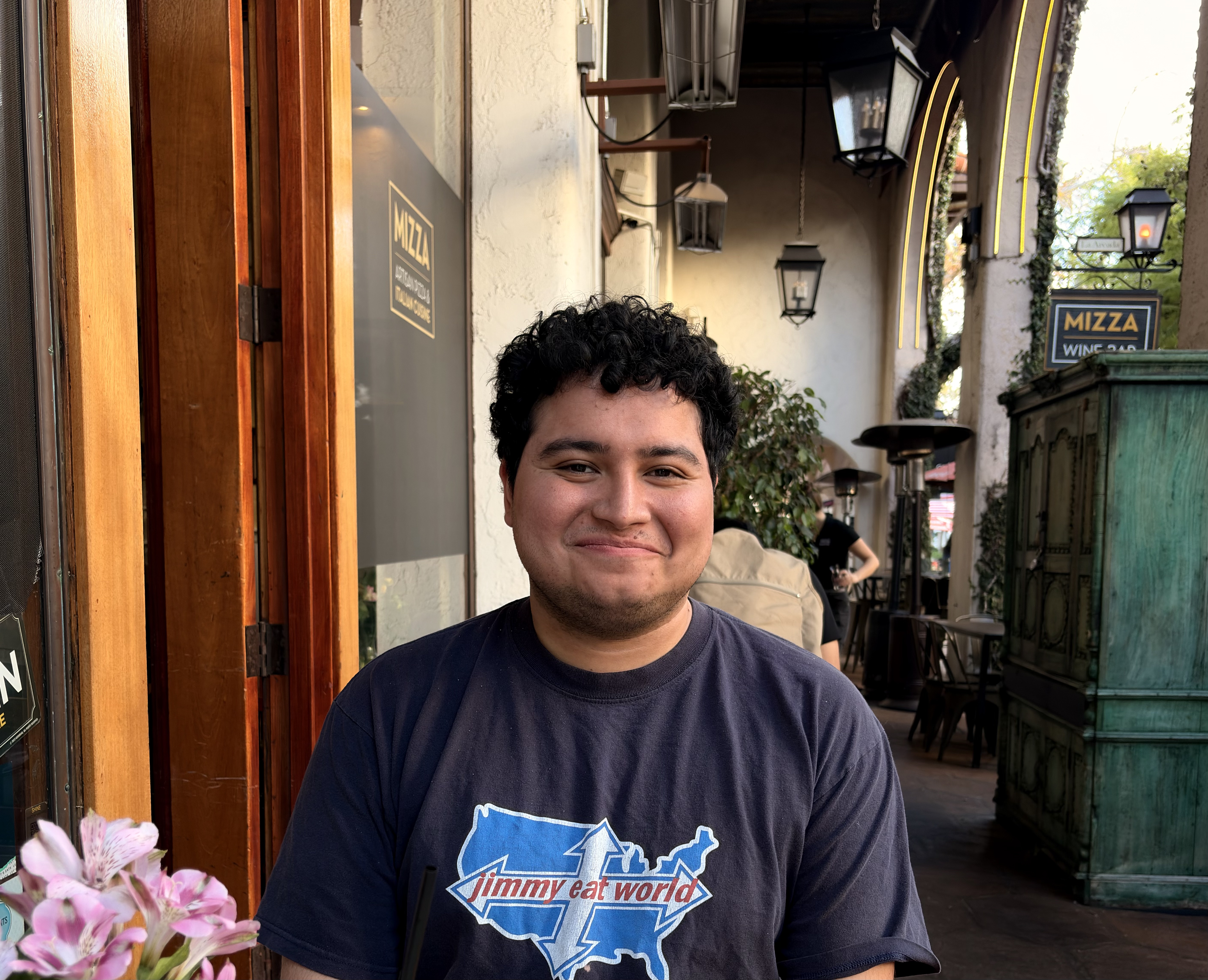
ES Major Edwin Majano Villalobos, June 2026
Ethnic Studies and History double major, Edwin Majano Villalobos, has been selected for the California State University (CSU) California Pre-Doctoral Program for 2026! Edwin's faculty mentor for this program is Ethnic Studies faculty member, Dr. Lydia Heberling. Edwin is one of only two Cal Poly recipients chosen for this year. Congratulations to scholar Edwin and his mentor Dr. Heberling!
The CSU designates these recipients as Sally Casanova Scholars. They receive individualized guidance from a CSU faculty mentor and may also collaborate with faculty at doctoral-granting institutions across the country. The program’s structure helps students strengthen their academic preparation, explore advanced research environments, and gain valuable experience for competitive Ph.D. applications.
These Sally Casanova Scholars join a statewide community of aspiring academics who represent the breadth and excellence of the CSU. This community connects scholars across disciplines and campuses, offering encouragement, collaboration, and professional networking opportunities that often extend well beyond the award year.
Read more about the CSU California Pre-Doctoral Program
ES Faculty Elvira Pulitano Essay in Peer Reviewed International Journal Published
Jun 16, 2026
ES Faculty, Elvira Pulitano, Essay Published: "Whereas We Respond": Layli Long Soldier's Acts of Sovereign Poetics and Indigenous Justice.
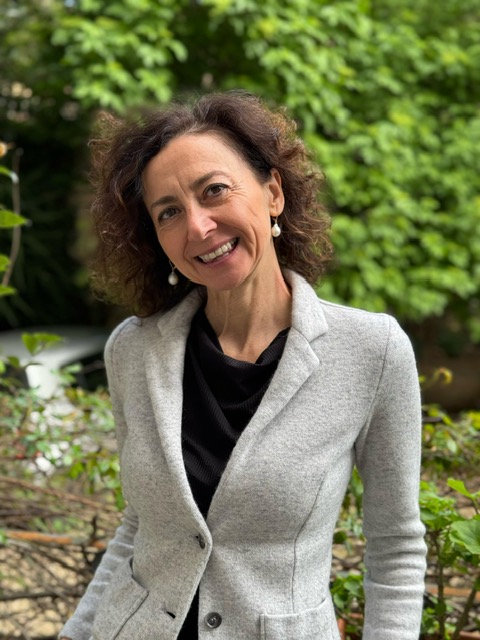
ES faculty member Elvira Pulitano, june 2025
Ethnic Studies Professor Elvira Pulitano recently celebrated the publication of her essay in a peer reviewed international journal, "Whereas We Respond": Layli Long Soldier's Acts of Sovereign Poetics and Indigenous Justice. This was published in ECHO: Interdisciplinary Journal of Communication: Languages, Cultures, Societies in a special issue titled, AlterNative Intelligences: Forms and Practices of Global, Indigenous Resurgences 7 in December, 2025. Please view the abstract down below and you can read the full essay on the ECHO linked under. Congratulations, Dr. Pulitano!
Abstract:
In 2009, the United States voted on a Congressional Joint Resolution of Apology to Native Americans. President Barack Obama signed the Apology, which, however, was never delivered to the public nor to representatives of Tribal Nations. The Apology text was later folded into a larger piece of legislation known as the 2010 Defense Appropriations Act. In her 2017 collection of poems WHEREAS, Oglala Lakota poet Layli Long Soldier presents a direct intertextual response to the Congressional Apology. Part II of the collection, also titled “WHEREAS”, adapts the tripartite structure of the Congressional Resolution by including “Whereas Statements”, “Resolutions”, and a “Disclaimer”. Writing as a dual citizen – an enrolled member of the Oglala Lakota Nation and a U.S. citizen – Long Soldier exposes the U.S. history of settler colonialism that continues to operate, embedded in the language of the Apology. This essay analyzes Long Soldier’s poetic enunciation as an act of defiance against the empty statements of the Congressional Apology. By excavating and exposing the Apology’s language, Long Soldier makes a decolonial intervention in “the language, crafting, and arrangement of the written document” (Whereas 57) and affirms the enduring presence and resistance of Indigenous Peoples in the United States and beyond.
Placing language and storytelling at the center of her poetic enunciation, Long Soldier frames resistance and resurgence within the everyday existence of Indigenous communities and their never-ending struggle to defend and reclaim their lands. Poem after poem, Long Soldier exposes the empty ritualistic rhetoric of the Congressional Apology that, despite its well-presented message of reconciliation, is void of any gesture amounting to reparations for the hundreds of Indigenous nations living within the borders of the United States. As we enter the second decade since the adoption of the United Nations Declaration on the Rights of Indigenous Peoples by the General Assembly in 2007, a landmark document in international law and Indigenous rights, yet still reluctantly accepted by the United States government, which continues to treat it as a non-legally binding text, this essay will also discuss how Long Soldier’s acts of “sovereign poetics” (Mishuana Goeman) can function as an empowering educational tool in the battle to decolonize international human rights law and affirm Indigenous self-determination.
ES Major Zora Sowinska Wins 2026 Academy of American Poets Contest
Jun 9, 2026
Ethnic Studies Major Zora Sowinska wins this year's Academy of American Poets Contest

ES Major zora Sowinska, June 2025 (photo from cal poly english)
Ethnic Studies major, minoring English, Zora Sowinska has won the Academy of American Poets Contest for 2026! She previously won this same award in prior year, 2025. Her winning poem titled, A Foray into the State of Orphanhood, has earned Zora a prize, membership, and will be announced in the Academy's Annual Report.
Presented by the Academy of American Poets, their University and College Poetry Prize program sponsors over two hundred annual poetry prizes at colleges and universities across the U.S, and has awarded cash prizes to nearly ten thousand student poets since the program's inception.
Read more about this on the English Department site here
Read more about the University & College Poetry Prizes
Read more about the Academy of American Poets
Conversation with Author Dr. Dylan Rodríguez & Dr. MT Vallarta, April 28
Apr 20, 2026
Asian American Studies Now: A Conversation with Author & Professor Dr. Dylan Rodríguez and Dr. MT Vallarta
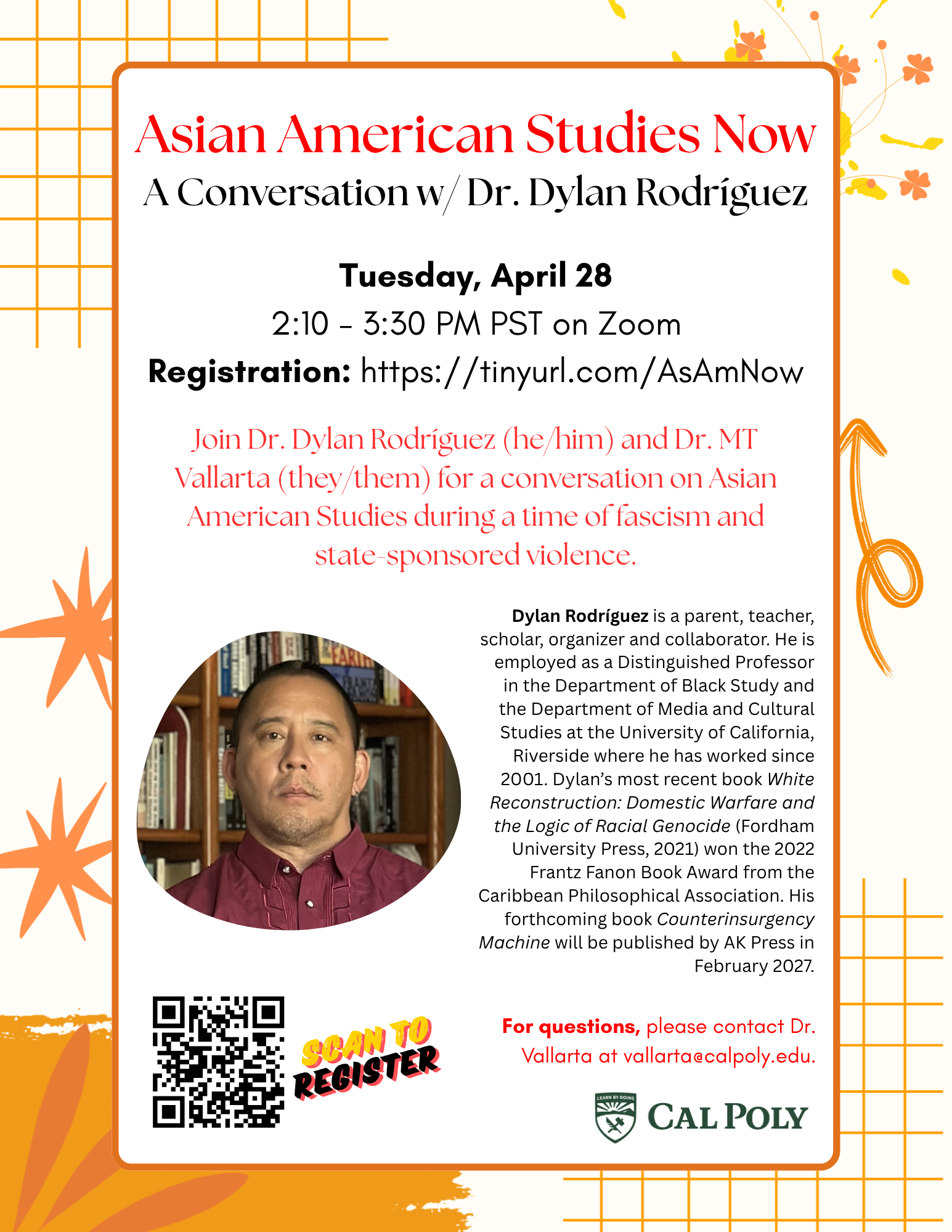
Dylan rodríguez guest talk, 2:10-3:30pm, April 28, 2026 on Zoom (link here)
The Ethnic Studies Department, organized by Assistant Professor Dr. MT Vallarta, will be hosting author and professor Dr. Dylan Rodríguez from the University of California, Riverside, for a dialogue with Dr. Vallarta where they will be discussing the current state of Asian American Studies under fascism and state-sponsored violence. This event is available on Zoom and will take place on April 28th, from 2:10 pm to 3:30 pm with the link and Zoom registration here. Please join us to hear more about this topic and the unfolding conversations!
About Dr. Dylan Rodríguez
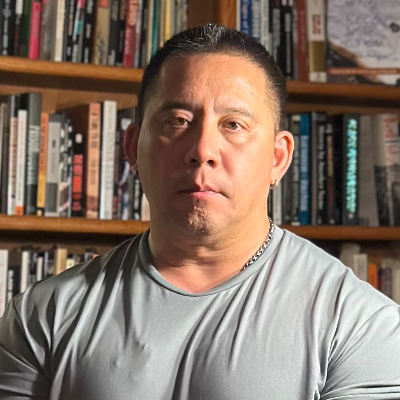
Dylan’s lifework focuses on liberationist, anticolonial, and abolitionist confrontations with the antiblack, colonial, and white supremacist violences that permeate the ongoing Civilization project. He is devoted to studying and teaching the historical, collective genius of rebellion, survival, and insurgent futurity that radically challenge dominant forms of authority, power, and institutionality.
Dylan Rodríguez is a teacher, scholar, organizer and collaborator who has worked at the University of California-Riverside since 2001. He is a Distinguished Professor in the recently created Department of Black Study as well as the Department of Media and Cultural Studies. Dylan served as Chair of the Department of Ethnic Studies from 2009-2016, Chair of the UCR Academic Senate from 2016-2020, and has worked as the Co-Director of the UCR Center for Ideas and Society since 2021. As the Co-Director of the Center, he created the Decolonizing Humanism(?) programming stream, which features scholars, artists, and intellectuals based in revolutionary, anti-colonial, and liberationist movements from all over the world. Dylan was elected President of the American Studies Association by his peers in 2020, the same year in which he was named to the inaugural class of Freedom Scholars, a national award program that intends to “recognize the role that Freedom Scholars play in cultivating and nurturing movements for justice and freedom.”
Read about Dr. MT Vallarta from their bio here
Pilipino Cultural Night (PCN) 37 Show, April 24-25
Apr 8, 2026
Pilipino Cultural Exchange Presents Pagkamulat on April 24th and 25th, 2026
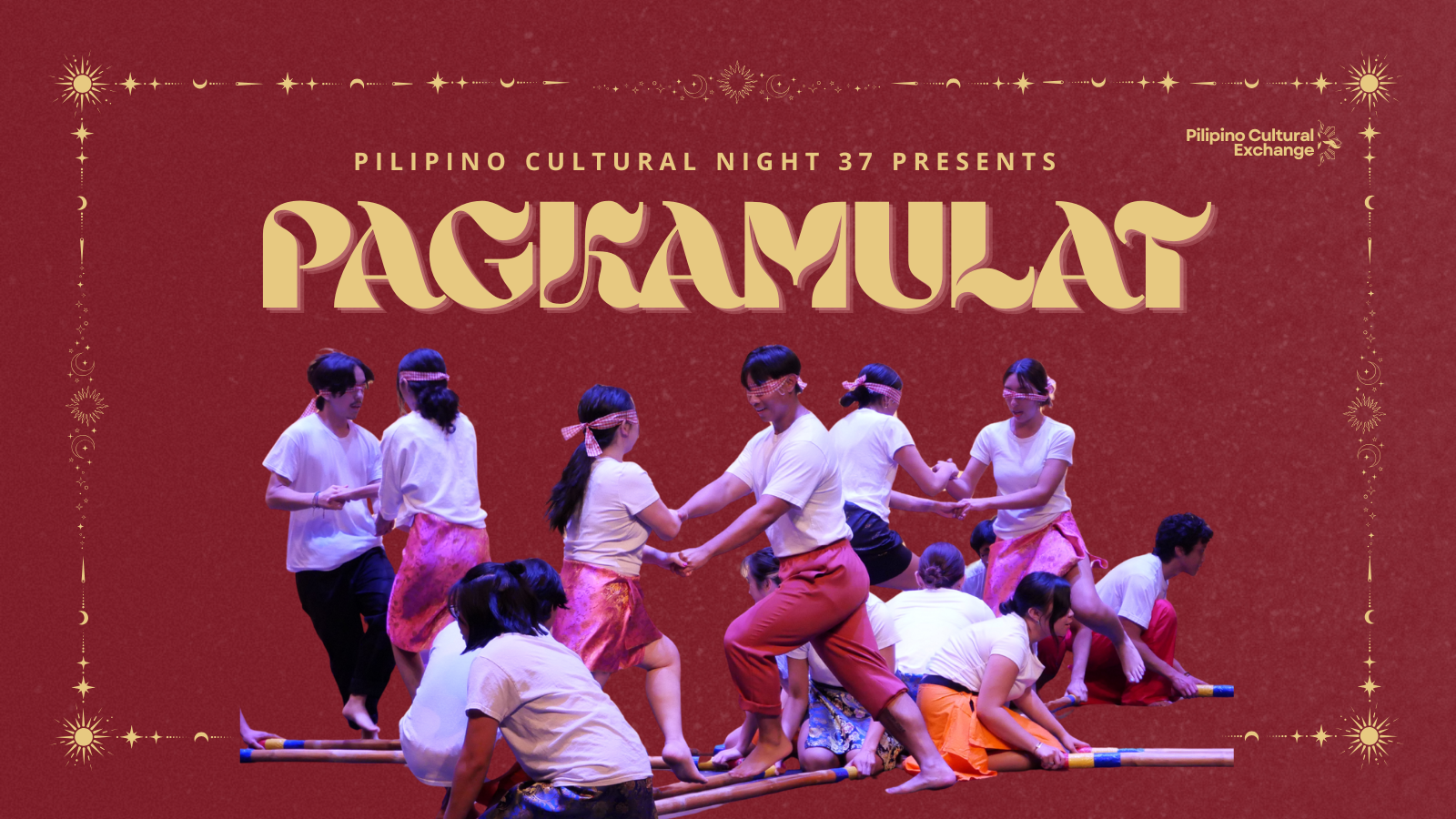
Pilipino Cultural Night 37 show, 7-10pm, april 24-25, 2026 at the clark center, arroyo grande, ca
The Pilipino Cultural Night (PCN) Instructionally Related Activity (IRA) and Pilipino Cultural Exchange (PCE) Club will be performing their annual PCN show, Pagkamulat! This event will take place on April 24th and 25th, from 7 pm to 10 pm at the Clark Center in Arroyo Grande, CA. Please see the ticket purchasing link below and coome support PCN & PCE's performance!
Cal Poly’s Pilipino Cultural Night (PCN) is a student-run cultural production that celebrates Pilipino-American heritage through dance, drama, and music. Created over the course of a year, PCN brings students together to showcase their talents and reconnect with their culture.
Pilipino Cultural Exchange (PCE) Website
New ES Topic in Spring 2026: Race in Horror Film and Fiction
Feb 9, 2026
ES 470-01: Race in Horror Film and Fiction Spring 2026 Course Information
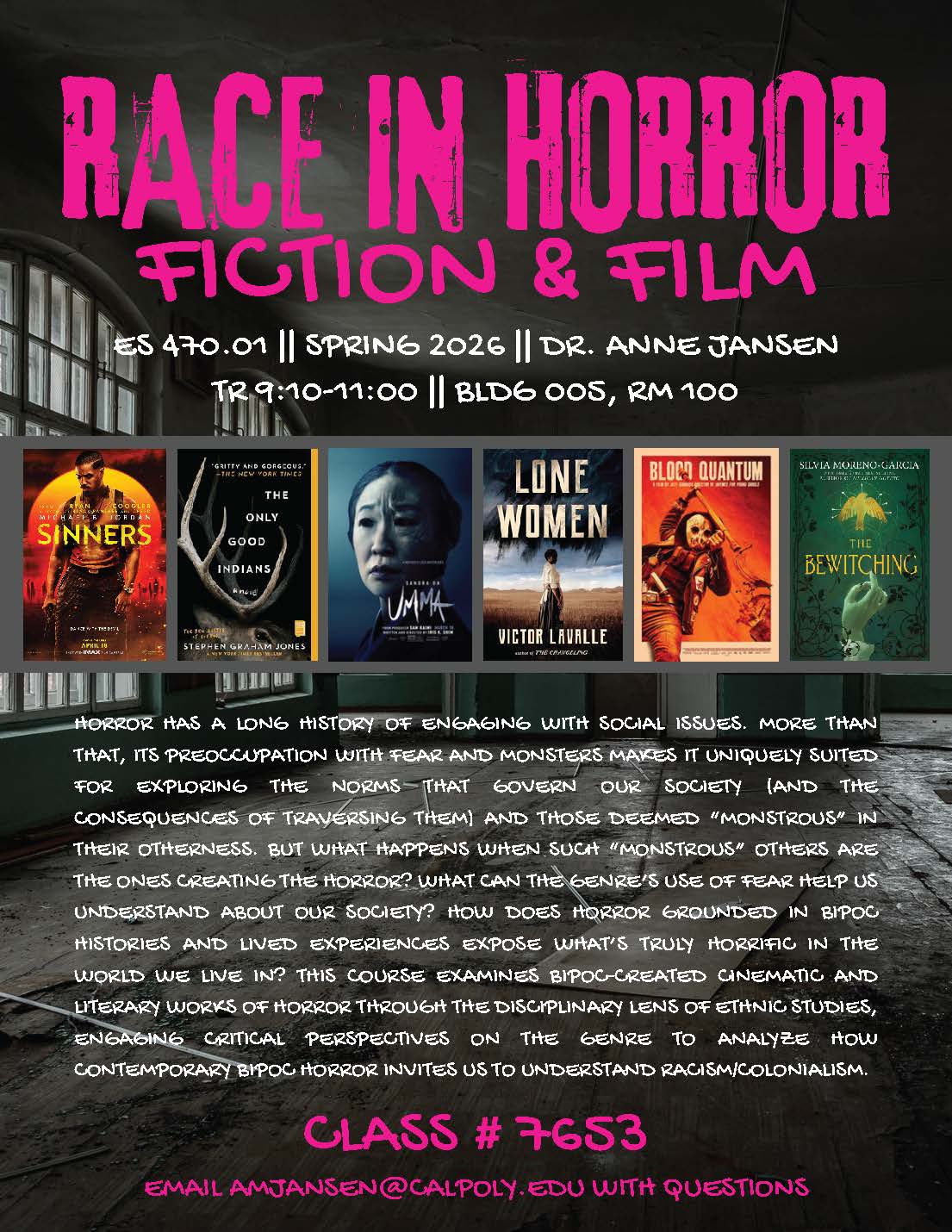
ES 470-01: Race in Horror Film and Fiction offered in Spring 2026
The Ethnic Studies Department is offering a new topic in Spring 2026!
ES 470: Race in Horror Film and Fiction examines BIPOC-created cinematic and literary works of horror through the disciplinary lens of ethnic studies, engaging critical perspectives on the genre to analyze how contemporary BIPOC horror invites us to understand racism/colonialism.
Horror has a long history of engaging with social issues. More than that, it's preoccupation with fear and monsters makes it uniquely suited for exploring the norms that govern our society (and the consequences of traversing them) and those deemed "monstrous" in their otherness. But what happens when such "monstrous" others are the ones creating the horror? What can the genre's use of fear help us understand about our society? How does horror grounded in BIPOC histories and lived experiences expose what's truly horrific in the world we live in?
This course will be led by Dr. Anne Jansen, amjansen@calpoly.edu, Lecturer in Ethnic Studies at Cal Poly. Please contact Dr. Jansen if you have any questions about the course.